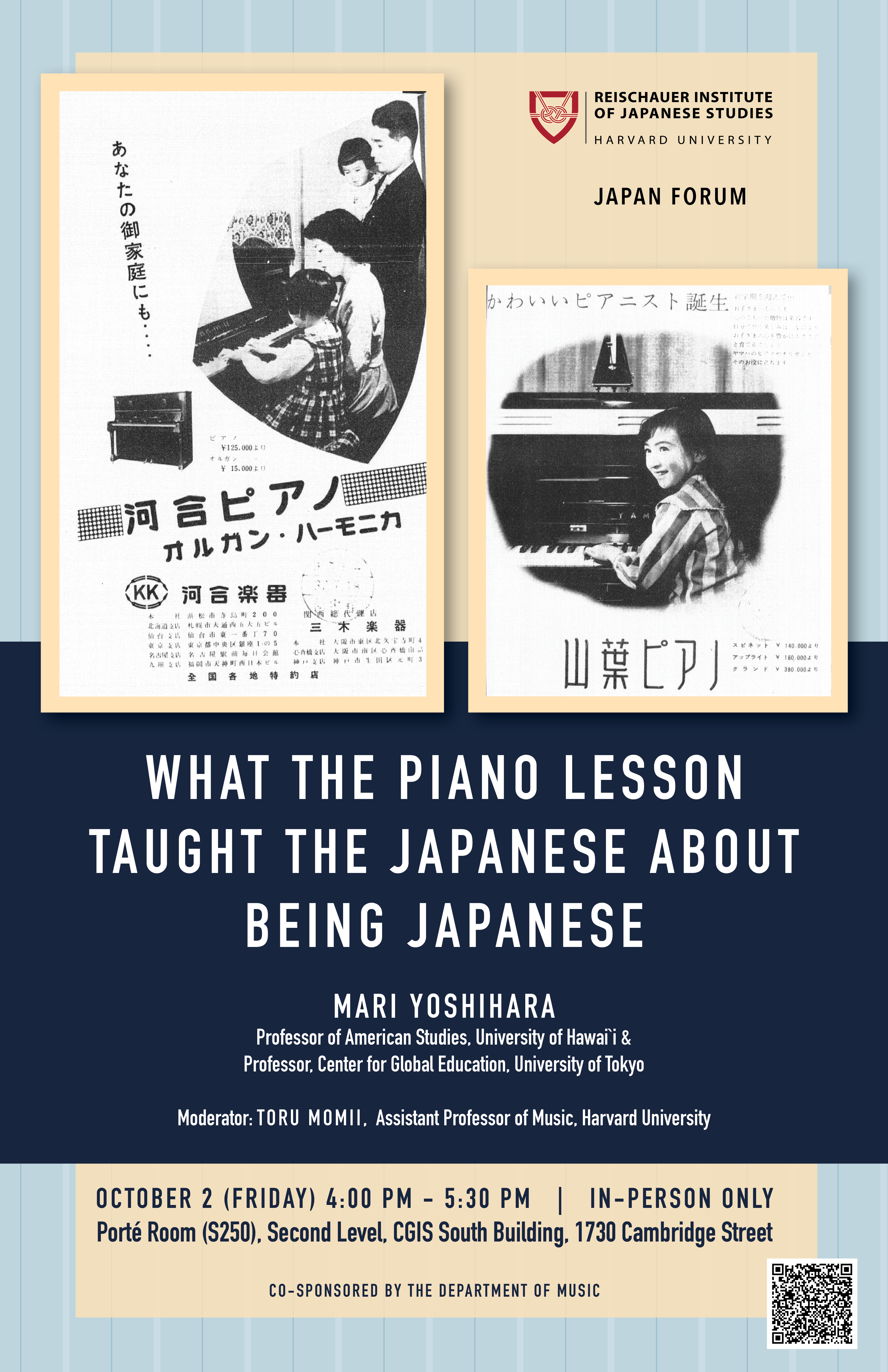
What the Piano Lesson Taught the Japanese about Being Japanese
One of the most potent symbols of Japan’s postwar economic growth was the piano. As the upright piano earned a seat in a corner of middle-class homes and many families eagerly sent their children to piano lessons, Hanon exercises and Beethoven’s Für Elise became a common part of Japan’s sonic landscape. For people who took piano lessons in Japan between the 1950s and the 1990s, piano no okeiko, literally the “piano lesson,” involved much more than learning to play the musical instrument: it exposed Japanese children to Westernized bourgeois life and taste; taught them how to dress, speak, and behave; and inculcated proper performance of gender roles. In other words, it was a lesson in propriety and protocol of a middle-class Japanese subject. Through interviews with approximately 100 individuals whose lives crossed paths with piano in one way or another, I examine what the mass preoccupation with piano no okeiko did to individual women and men as well as consider the legacies of the practice on Japanese society at large.
Reischauer Institute Japan Forum co-sponsored by the Department of Music