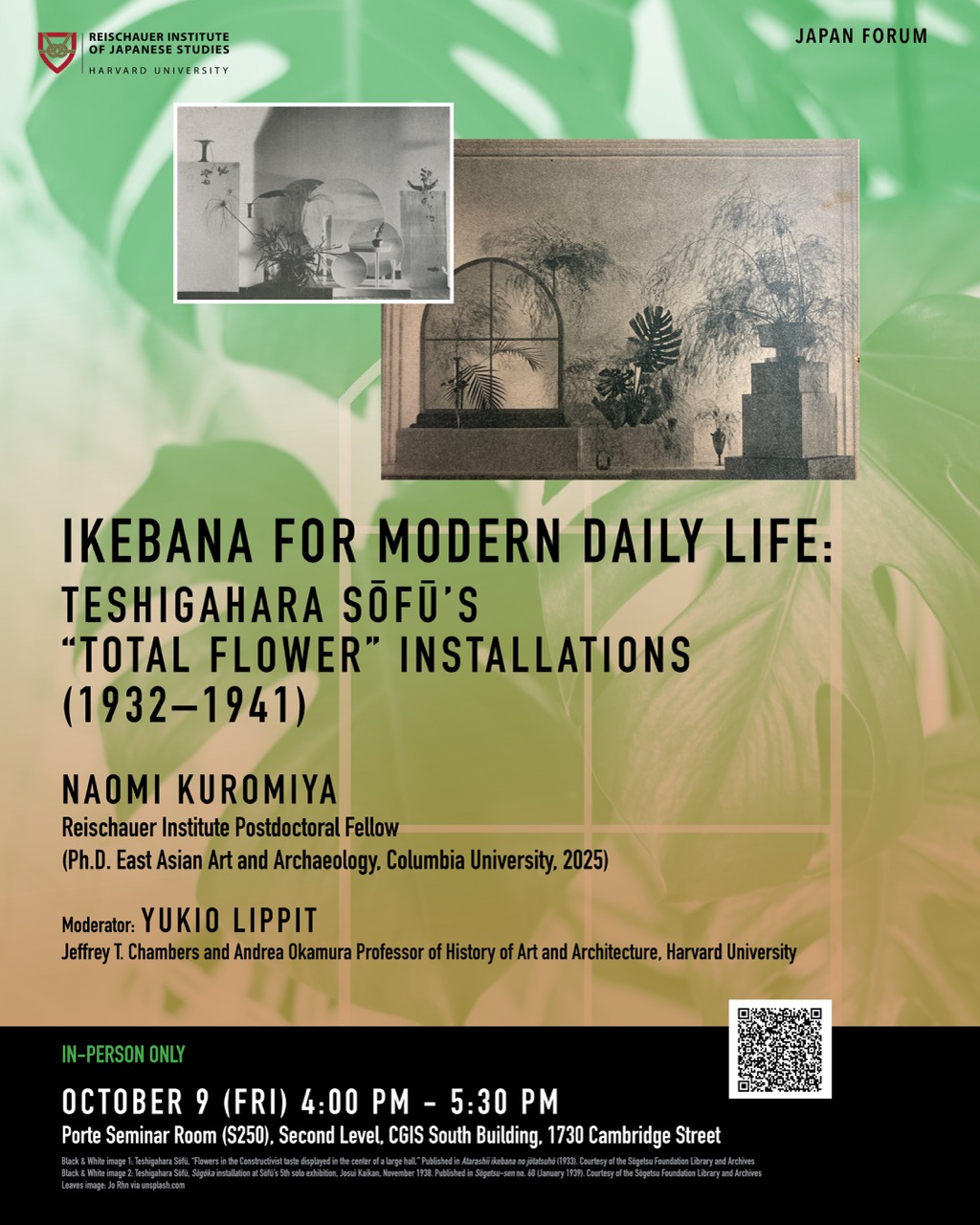
Ikebana for Modern Daily Life: Teshigahara Sōfū's "Total Flower” Installations (1932–1941)
Despite being closely intertwined with artistic and cultural developments in Japan, ikebana has received relatively little analysis within the field of art history. This blind spot is particularly noteworthy in the early 20th century, when ikebana leaders began consciously positioning their arrangements as artworks in response to a perceived decline in the everyday relevance of the genre. This presentation examines formal, material, spatial, and conceptual developments in modern Japanese flower arrangement through a case study of Teshigahara Sōfū (1900–1979), the founder of the Sōgetsu school of ikebana. Sōfū, an advocate for ikebana as art (geijutsu), believed that displaying ikebana works successfully within exhibition halls could help elevate their artistic status in modern times. Throughout the 1930s he exhibited large-scale experimental installations, dubbed sōgōka ("total flowers"), that combined ikebana and multiple media into immersive environments. By analyzing their remaining photographic documentation, this presentation shows how sōgōka drew visual inspiration from Constructivism, Surrealism, and new architectural spaces, but remained grounded in timeless intangible qualities of ikebana. The overlapping historical consistencies and radical innovations of sōgōka highlight the unexpected ways in which many artists participate in modern art historical narratives of linear progress and ruptures from the past.
Reischauer Institute Japan Forum